
Choosing the right orthodontist for your family is one of the most important health decisions you’ll make for your kids, teens, and even yourself. The right specialist shapes smiles, builds confidence, and makes a multi-year smile journey feel like a positive experience. This guide walks you through exactly what to look for, how to compare practices, and the questions that help you pick with confidence. Every family deserves honest answers before making this choice, and Dr. Thomas Kwong and our team at Kwong Orthodontics are here to help you ask the right ones.

What Makes a Great Family Orthodontist?
A great family orthodontist is a dental specialist who completed 2-3 years of additional residency training beyond dental school, focusing exclusively on tooth movement, bite correction, and jaw development for patients of all ages. The best family practices treat kids, teens, and adults under one roof, making life easier for busy parents juggling multiple schedules.
Here’s what sets a strong family orthodontist apart from a general dentist offering aligners on the side:
- Specialty training: An orthodontist holds a DDS or DMD plus a university-based orthodontic residency.
- Clear communication: You should feel heard, not rushed, during every visit.
- Modern technology: Digital scans, 3D imaging, and smile planning tools improve accuracy.
- Scheduling flexibility: Family-friendly hours matter when you’ve got school, work, and sports.
Dr. Kwong earned his DDS, Orthodontic Certificate, and Master of Science in Oral Sciences from the University of Illinois at Chicago, and at Kwong Orthodontics we treat patients of all ages, from first screenings at age 7 through adult clear aligners. That continuity matters when your family’s smile goals span years.
How to Evaluate and Choose an Orthodontist: Step-by-Step
Finding the right fit doesn’t have to be stressful. Follow these six steps to narrow your options and feel confident in your choice.
- Start with trusted referrals. Ask your family dentist, close friends, coworkers, or your child’s pediatrician. People who know you well often point you toward practices that match your values.
- Verify credentials. Look for a DDS or DMD degree, membership in the American Association of Orthodontists (AAO),.
- Research smile journey options offered. A full-service practice should offer metal braces, clear braces, and clear aligners so your family has real choices. If a practice only pushes one option, that’s a yellow flag.
- Read Google reviews and view before-and-after galleries. Look for specific details in reviews (named team members, descriptions of visits) rather than generic praise. Before-and-after photos show real smile goals delivered.
- Schedule a free consult. This is your chance to meet Dr. Kwong, tour the modern office, and see how the team interacts with your family. Kwong Orthodontics offers both in-office free consults and a virtual consult option for busy families.
- Compare two or three practices. Don’t commit after the first visit. Compare smile journey recommendations, office vibe, and how comfortable your child feels.
Trust your gut. If a practice feels pushy or vague, keep looking.
Benefits of Choosing the Right Family Orthodontist
Picking one practice to care for your whole family pays off in ways you’ll notice immediately and years down the road. Here’s what you gain when you choose well.
- One practice for every age. Kids, teens, and adults all cared for in the same office means fewer drives, fewer logins, and one familiar team. Kwong Orthodontics is built for patients of all ages.
- Shared history across siblings. When Dr. Kwong has seen your oldest through braces, he already understands your family’s dental history, scheduling preferences, and communication style when it’s your youngest’s turn.
- Simpler scheduling. Many family practices book sibling visits back-to-back, so one trip covers multiple family members. Ask about coordinating visits during your free consult.
- Better smile goals from a specialist. Specialists trained in orthodontics are equipped to deliver more predictable smile goals than general practitioners, especially for complex bite issues.
- Age-appropriate care at every stage. Early intervention at age 7, growth guidance for pre-teens, aesthetic options for teens, and discreet clear aligners for adults, all handled by one trusted team.
- Deeper relationships over time. A smile journey often spans 12-24 months. A doctor and team who truly know your family make that time more enjoyable and more effective.
Families tell us the biggest surprise is how much calmer life feels when every smile is handled in one place. That’s part of our commitment to beautiful smiles, memorable experiences.
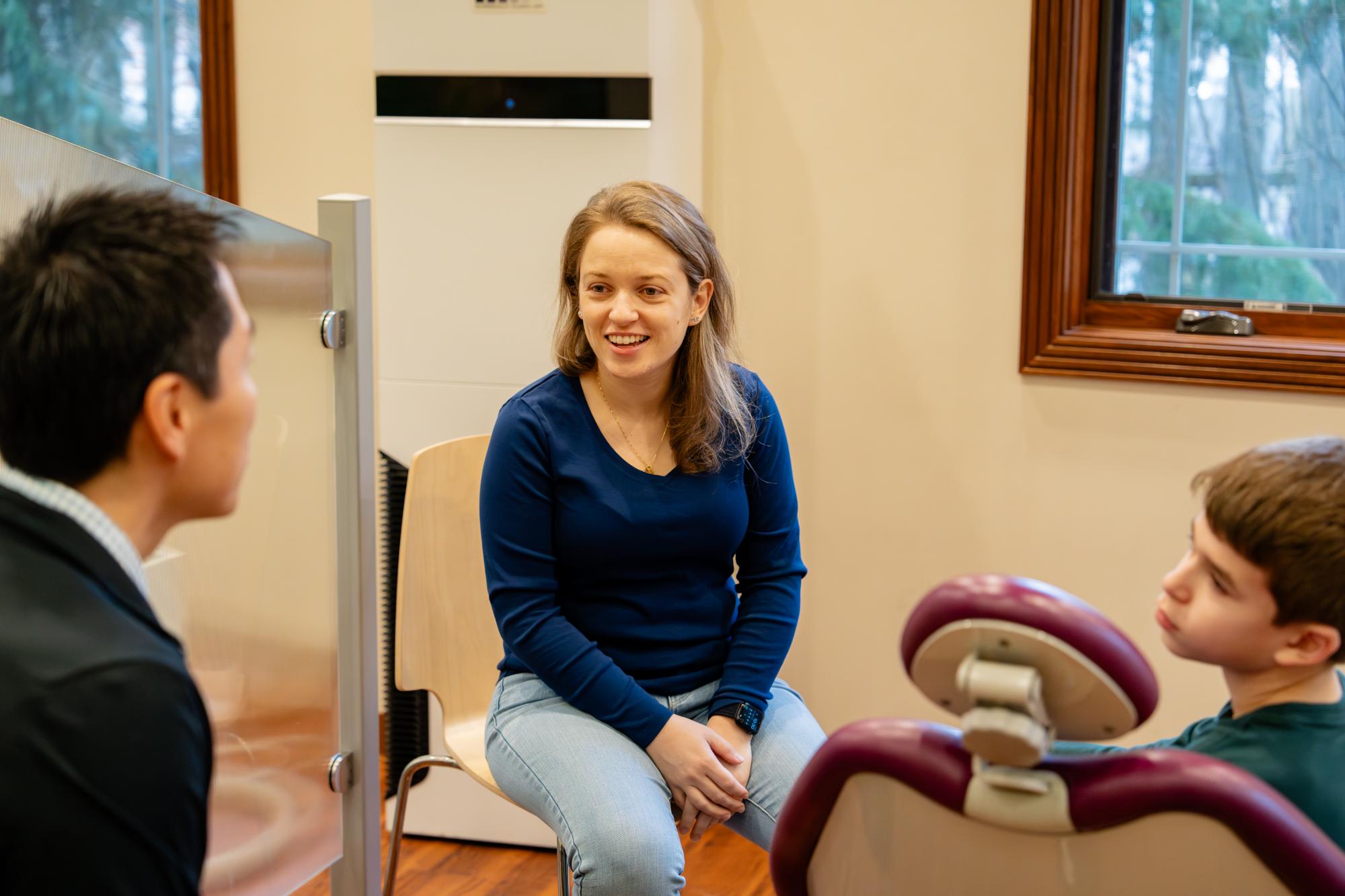
Orthodontist vs. General Dentist vs. Mail-Order Aligners
Not every option that moves teeth is the same. Here’s how the three main paths compare so you can choose wisely.
| Factor | Orthodontist | General Dentist | Mail-Order Aligners |
|---|---|---|---|
| Training | DDS/DMD plus 2-3 year residency in orthodontics | DDS/DMD only, weekend courses in aligners | No in-person clinician involved |
| Diagnostics | Full records, digital scans, 3D imaging | Varies, often limited | Self-taken photos and impressions |
| Supervision | Regular in-office visits every 4-8 weeks | Occasional check-ins | None in person |
| Complex care | Handles mild to severe bite issues | Simple spacing or crowding only | Mild cosmetic alignment only |
| Safety net | Immediate help for issues | Limited problem-solving | Customer service only |
Orthodontists are the specialists. Dr. Kwong trained for years beyond dental school specifically to diagnose and address bite issues, crowding, spacing, and jaw development. For most families, this is the safest and most reliable choice.
General dentists may offer clear aligners as a side service. For very simple cosmetic alignment on an adult with a healthy bite, this can work. For kids, teens, or anyone with bite concerns, a specialist is a better fit.
Mail-order aligners skip the in-person exam entirely. The AAO has publicly cautioned consumers about care without hands-on diagnosis, because hidden issues like root concerns, gum disease, or bite misalignment can go undetected.
Who Is a Good Candidate for Family Orthodontic Care?
Orthodontic care works for nearly every age. Here’s how candidacy breaks down by life stage and the signs that tell you it’s time to schedule a free consult.
- Children (ages 7-10): The AAO recommends every child have a first orthodontic screening by age 7. Early evaluation catches jaw growth concerns, severe crowding, or bite issues while they’re easiest to correct.
- Teens (ages 11-17): This is the classic window for metal braces, clear braces, or clear aligners designed for teens. Adult teeth are in, growth is still happening, and smile journey timelines are often efficient.
- Adults (18+): Adults are a growing share of orthodontic patients, and clear aligners and clear braces give grown-ups discreet options that fit professional life. Many of our adult patients come in for cosmetic reasons but discover bite correction improves comfort too.
Signs orthodontic care may be needed:
- Crowded or crooked teeth
- Noticeable spacing or gaps
- Overbite, underbite, or crossbite
- Jaw clicking or discomfort
- Difficulty chewing or speaking clearly
- Thumb-sucking affecting tooth position (in young children)
Families with multiple members considering a smile journey often save time by scheduling coordinated evaluations. Ask about scheduling siblings or parents back-to-back for a clear picture of everyone’s smile goals at once.
[IMAGE_SUGGESTION: Three generations smiling together, grandparent, parent, and child]
Frequently Asked Questions
How do I find the best orthodontist near me?
Start with referrals from your family dentist, friends, and coworkers. Then verify credentials (DDS/DMD, AAO membership), read detailed Google reviews, and schedule free consults at two or three practices. Trust the one where you feel heard and the team genuinely connects with your family.
At what age should my child first see an orthodontist?
The American Association of Orthodontists recommends every child have their first orthodontic screening by age 7. At this age, enough permanent teeth have come in to spot developing issues early. Most kids won’t need a smile journey yet, but early evaluation lets Dr. Kwong monitor growth and recommend the right timing if care is needed.
Can one orthodontist treat my whole family?
Yes, and it’s one of the biggest advantages of choosing a family-focused practice. Kwong Orthodontics cares for patients of all ages, from first screenings for young children through clear aligners for adults. One practice means one set of records, familiar faces at every visit, and simpler scheduling for busy families.
What red flags should I watch for when choosing an orthodontist?
Watch out for high-pressure sales tactics, lack of specialty credentials, and one-size-fits-all smile journey recommendations. If a practice pushes you to decide the same day, or only offers one option, keep looking. A good orthodontist welcomes your questions and gives you time to decide.
Do I need a referral from my dentist?
No, you don’t need a referral to see an orthodontist. You can call any practice directly and schedule a free consult. That said, your dentist often knows your dental history well and may suggest the right time to seek orthodontic input, so it’s worth asking at your next cleaning.
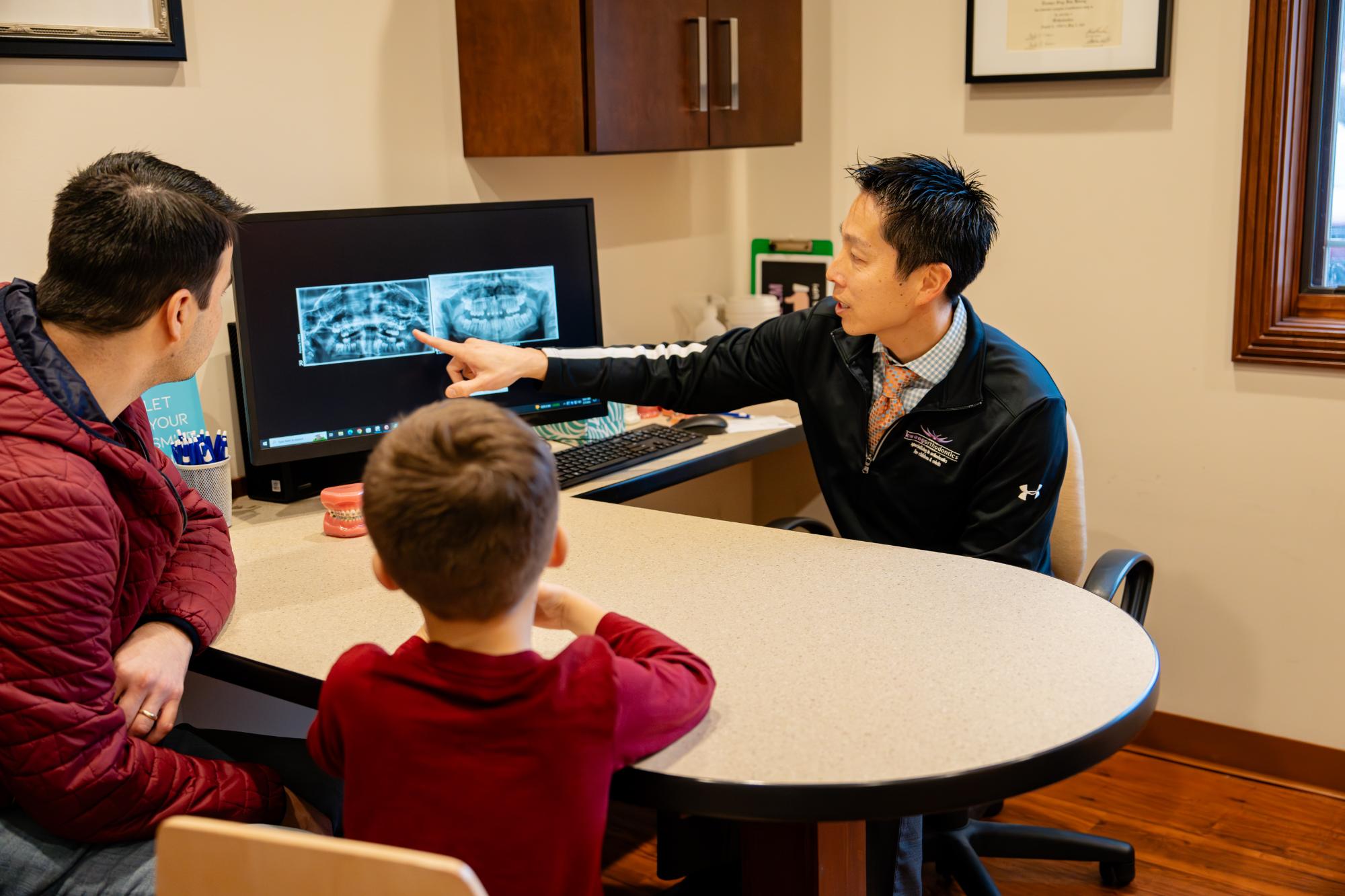
Ready to Find the Right Fit for Your Family?
Choosing the right orthodontist shouldn’t feel overwhelming. At Kwong Orthodontics in Portage, Dr. Thomas Kwong and our dedicated team are here to answer every question, walk you through all your options, and help you feel confident about your family’s smile goals. Your free consult is the perfect first step, no pressure, no commitment, just honest answers.
Call us at 269.327.4459 or schedule your free consult online. We’re proud to serve families throughout Portage, Kalamazoo, and the greater Kalamazoo area, improving lives, one smile at a time.